

What is NeuroCircuit?
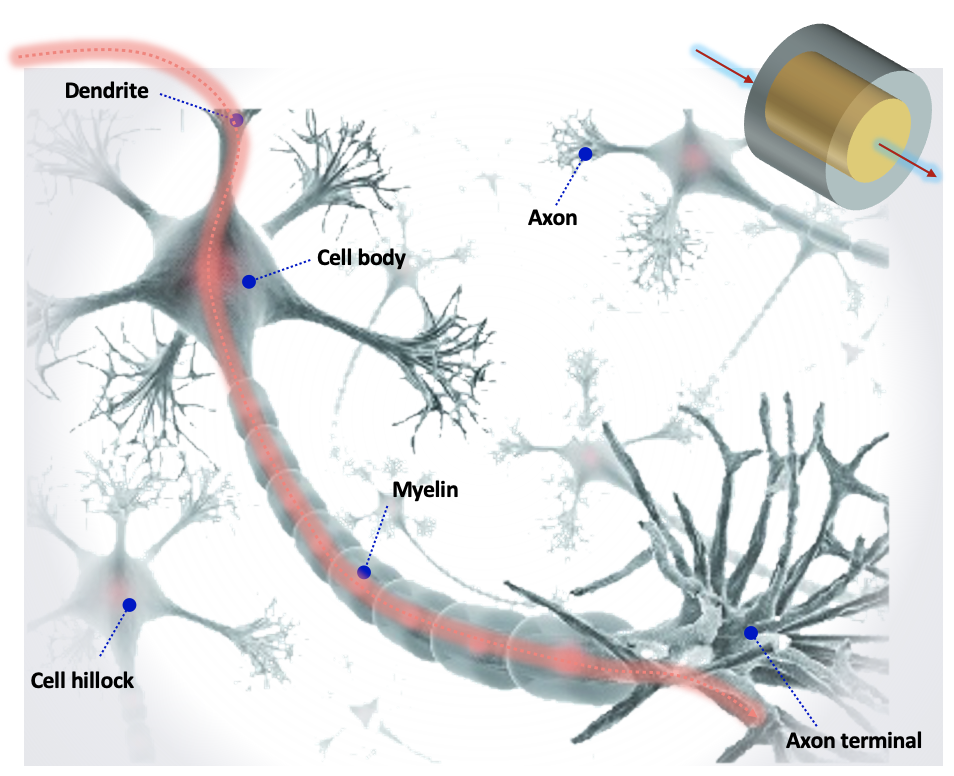
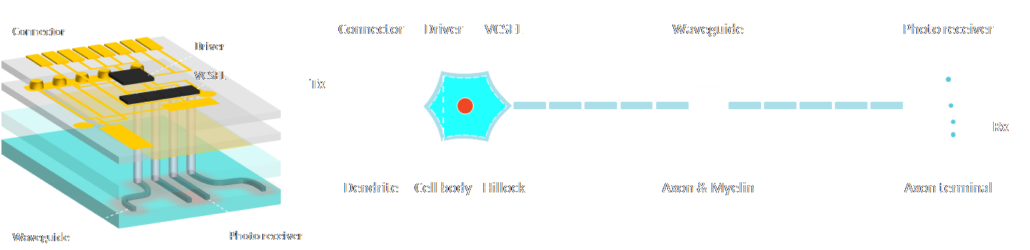
The operational concept of NeuroCircuit closely mimics the function of the “neuron system.” The system begins with the dendrite (Connector), which receives electrical signals and transmits them to the cell body and hillock (Tx, Transmitter), where the signals are converted into optical signals. These optical signals are transmitted through the axon and myelin (Waveguide) to the axon terminal (Rx, Receiver), completing the continuous and high-speed transmission of signals involved in sensory stimulus reception, information integration, and pulse conduction.

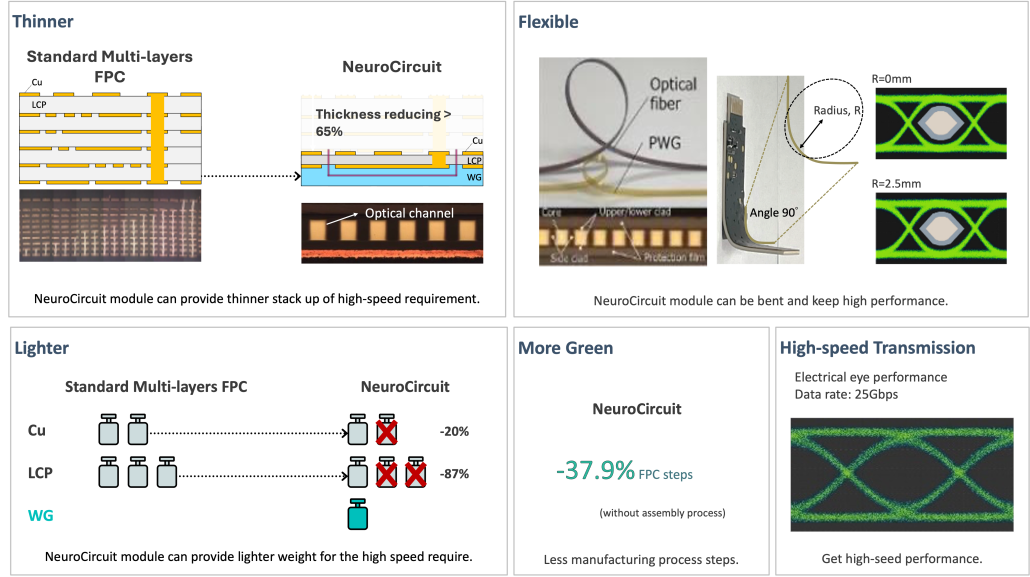
Benefits of NeuroCircuit
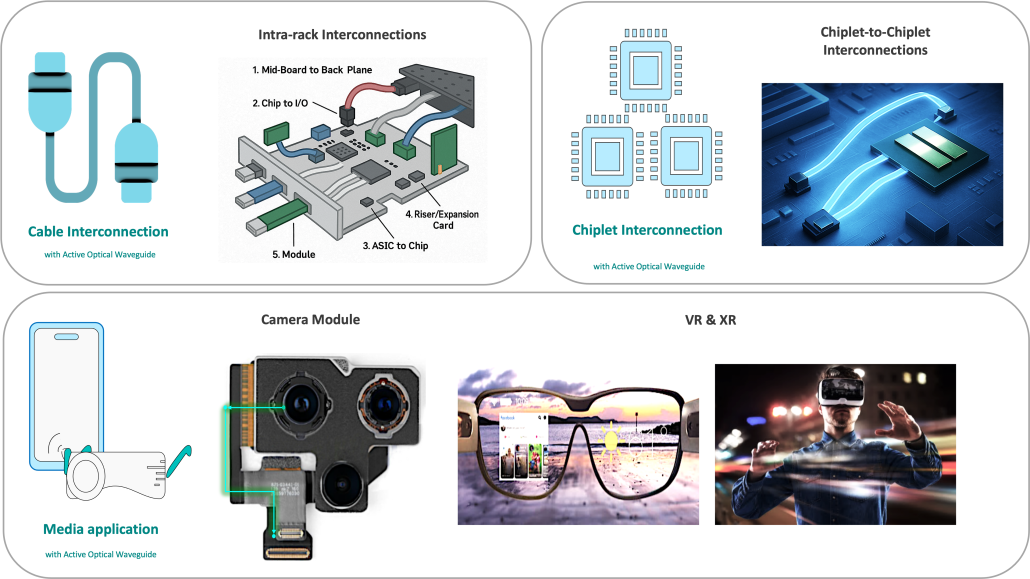
Applications & Opportunity
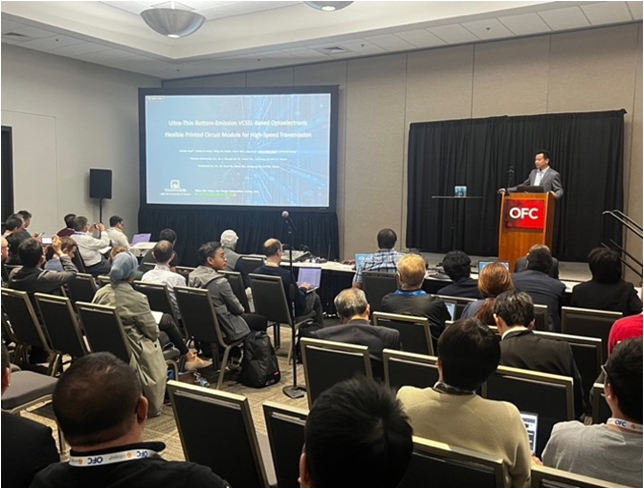
Paper for Oral Presentation in OFC 2024
Ultra-Thin Bottom-Emission VCSEL-Based Optoelectronic Flexible Printed Circuit Module for High-Speed Transmission
With the increasing demand for high-bandwidth applications in the consumer electronics market, various interfaces such as USB, Thunderbolt, PCIe, HDMI, MIPI, etc. [1 – 4] have continuously introduced new specifications to meet the high data transmission requirements associated with higher-resolution videos, larger-pixel cameras, and increased data streaming between application processors and modules. Furthermore, mobile devices have become smaller, thinner, and lighter than ever before, incorporating diverse antennas and receiving modules such as Bluetooth, wireless LAN (local area network), GPS (global positioning system), NFC (near-field communication), satellite phones, and more. As a result, the signal quality, into which electromagnetic interference (EMI) noises are mixed, must further deteriorate under ultrahigh circuit density. To address this challenge, some researchers have proposed the application of optoelectronic interconnection modules for transmitting high-speed optical signals. This innovative approach not only prevents EMI problems but also allows mobile devices to maintain their usual compactness [5].